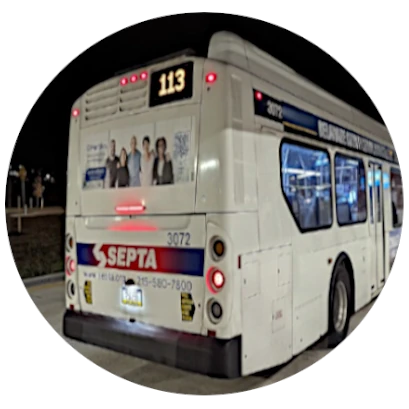
SEPTA accident lawsuit funding is a fast way to receive a cash advance during litigation. The funding amount is tied to your anticipated settlement and the strength of your case, not credit history.
If you’re a plaintiff injured in a SEPTA accident, you’ll need immediate cash flow to pay bills, put food on the table, or pay rent. Receiving lawsuit advances for public transit accidents can reduce further debt, while helping you gain financial stability.
How To Apply for SEPTA Accident Lawsuit Funding
Applying for SEPTA accident lawsuit funding is fast and simple. After you complete the plaintiff application, the evaluation process begins quickly to determine if you qualify.
If approved, you can expect a cash advance immediately via check, debit card or directly to your bank account. Here’s how to apply and next steps:
Apply Online In Minutes Complete our plaintiff application in just a few minutes to get the process started.
Case Evaluation Our legal funding underwriters will review your SEPTA accident case to see if you qualify for funding.
Sign Funding Agreement If approved, sign the funding agreement to finalize your request to borrow money from your settlement.
Receive Your Funding Receive a cash advance in 24 hrs. from one of the top-rated lawsuit funding companies in the nation!
What Can Lawsuit Advances Be Used For?
SEPTA accident lawsuit advances from Thrivest Link provide plaintiffs with the needed cash flow to afford living expenses and medical costs. This is equally important when you’re caught up in lengthy litigation, and bills keep piling up.
SEPTA is a regional public transportation authority that operates nearly 2,300 vehicles in five counties in and around Philadelphia, Pennsylvania. SEPTA stands for the Southeastern Pennsylvania Transit Authority.
It has an annual ridership of nearly 330 million riders on buses, trolleybuses, commuter rail, heavy rail, light rail, rapid transit, and tram cars. By sheer volume alone, accidents and injuries are bound to happen.
Common Causes of SEPTA Accidents
Accidents are more prone to SEPTA vehicles and passengers in the morning hours as it is believed that rush hour brings out those motorists who are in a rush to get to work on time. Additional reasons for morning accidents are drowsy, drivers, the increased volume of traffic, buses merging onto street and highways, and buses running behind on time.
The most common types of SEPTA accidents include left side impacts and rear-end collisions that can result in a number of injuries ranging from scratches and bruises to catastrophic injuries like traumatic brain injuries or death. With regards to train and subway accidents, primary causes that can result in employee and pedestrian injuries include:
HUMAN FACTORS
TRACK DEFECTS
MISCELLANEOUS CAUSES
EQUIPMENT DEFECTS
SIGNAL DEFECTS
Types of SEPTA Transit Accident Claims
Plaintiffs of SEPTA transit accidents usually suffer similar injuries to those sustained in other motor vehicle accidents including head and brain injuries, back and spine injuries, sprains, fractures, abrasions and burns. This dangerous field of work has many accident risk factors including lifting heavy cargo, frequently using heavy machinery and the inability to stop a train quickly.
These factors can lead to collisions, highway-rail and trespassing incidents, and derailments. We have worked with victims of many railroad cases that were injured from the following reasons:
CONDUCTOR OR CREW MEMBER NEGLIGENCE
FAILURE TO FOLLOW LEGALLY MANDATED SAFETY REGULATIONS
Thrivest Link Legal Funding is an industry leading pre-settlement funding firm offering fast cash advances and lawsuit loans nationwide.
Main Headquarters
1100 E Hector St Suite
210, Conshohocken, PA 19428
Contact Us
Call Us: (888) 697-7352
Hours of Operation
Mon - Fri: 9.00am - 5.00pm
Holidays : Closed
x
Funding Application Form
Phone Number: (888) 697-7352
Disclaimer: Pre-settlement funding, often referred to as lawsuit loans or settlement loans, is not a loan. You won’t owe anything unless your case results in a settlement.